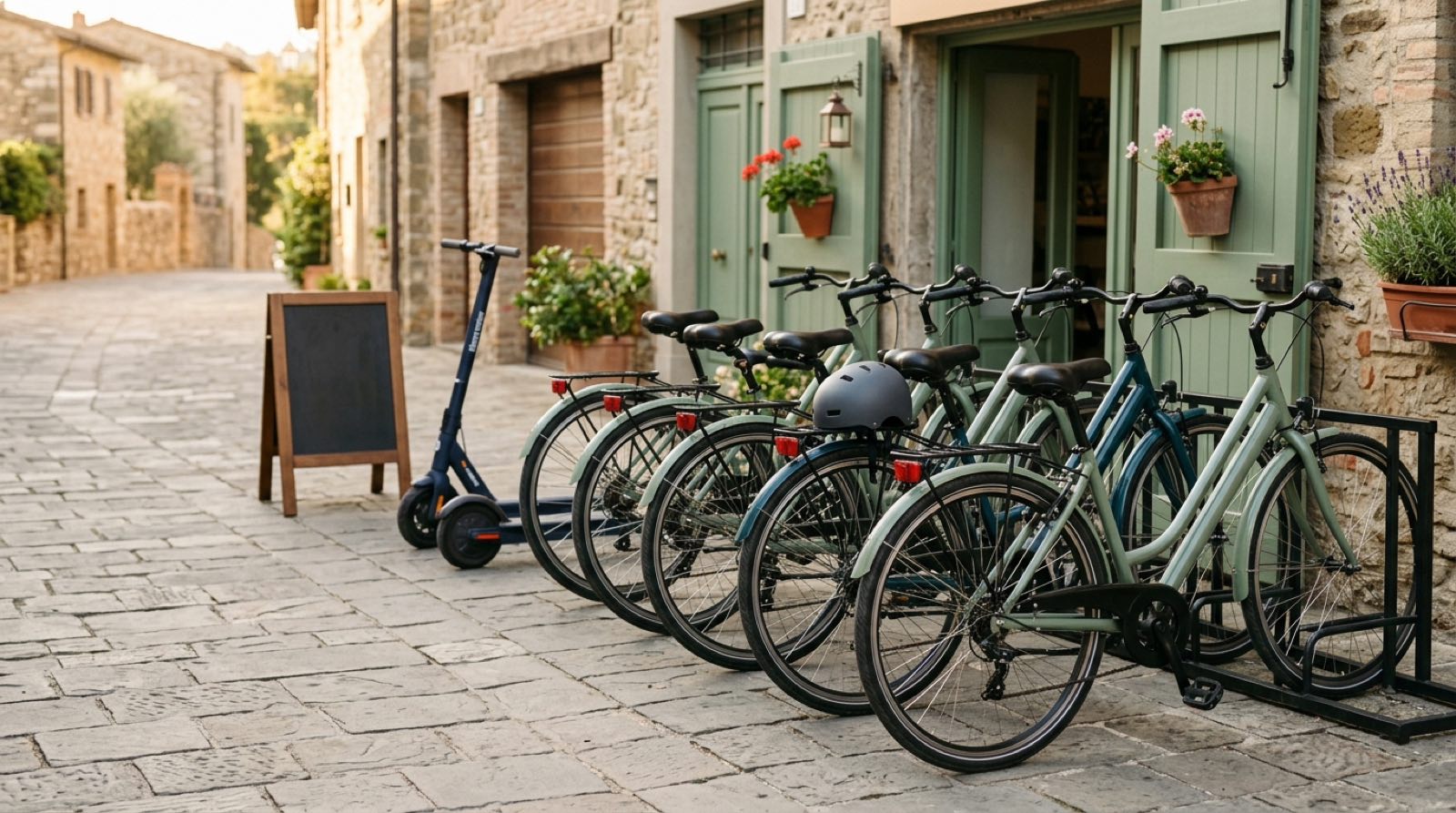
Hire a bike for the afternoon, a scooter for the week, or a kayak for the day, and somewhere in the paperwork there is a deposit. For these smaller, high-volume rentals the deposit is often where the friction is: the amounts are modest, the operators are small, and the customer base skews young and frequently pays by debit card rather than credit. This guide explains how deposits work for bike, scooter and equipment rentals across Europe, what the typical amounts are, the difference between a card hold and a cash deposit, and why the real friction sits on the operator's side, not the guest's passport.
The core idea: the deposit exists to cover damage, loss or theft of the item, and for the guest it should be as easy to leave, and as easy to get back, as the rental itself.
It is an amount the renter provides before pick-up to guarantee the item is returned in good condition. It is usually taken as a card pre-authorisation (a temporary hold, not a charge) or a cash deposit, and it is returned or released when the item comes back undamaged. If there is damage, loss or theft, the operator can deduct the substantiated cost.
The trouble is usually misdiagnosed as the guest's card. It rarely is: anyone with a credit card carries Visa or Mastercard, which work internationally. The real friction is two-sided and specific to this category:
That combination, speed, international guests, and variable value, is why a clear, trusted deposit method matters more here than almost anywhere else.
Whether it's a bike or a drill, the mechanics are the same.
For card holds, releasing the money has the same two-stage delay as any rental: the operator lifts the hold, then the guest's bank clears it. Operators and consumer guidance note this can take up to about seven days, and sometimes longer depending on the bank and country. Our guide to how deposit holds work covers the timing in detail.
Amounts are set by the operator and scale with the value and risk of the item, so they vary widely by country and business. As an illustration of common practice, some operators publish ranges along these lines:
| Item | Typical deposit range (illustrative) |
|---|---|
| City / standard bicycle | around €100 |
| E-bike | around €300 |
| Scooter / moped | ~€400 to €1,500, by engine size |
| Equipment / tools | scaled to replacement value |
Illustrative ranges from operator FAQs and rental-industry sources; actual amounts vary. Sources: operator terms; Booqable.
For equipment and tool hire the logic is explicit: the deposit is set at or above the potential cost of damage or replacement, and it is refundable when the item comes back in the same condition. Credit-card pre-authorisation is widely described in the rental-software industry as the "gold standard" precisely because it holds rather than charges the money.

For a small bike, scooter or equipment operator, the gap is a deposit process that works without a heavy payments setup and without freezing a young customer's debit balance. Because Deposiq is method-agnostic, the operator can take a deposit the way that fits, a card hold where it makes sense, or a recorded cash or bank deposit where it doesn't, instead of falling back on untracked cash or a passport at the desk. Either way, both sides get a single, shared record: the amount, the status, the condition evidence, and when it's released.
For a high-volume, self-service operator that record does two things at once: it makes each deposit transparent to the guest (so a €100 bike hold isn't a mystery, and a debit customer knows exactly what's held and when it clears), and it gives the operator a clean, defensible trail if an item comes back damaged or doesn't come back at all. The point isn't to charge more; it's to make a small deposit as trustworthy and effortless as the rental itself.

For bikes, scooters and equipment, the deposit is small but the friction is real, driven by small operators without a proper deposit setup, a debit-card customer base, and items of very different value. Clear amounts, a proper deposit method rather than a passport or untracked cash, and a dated condition record are what keep these rentals dispute-free. For the guest that means confidence; for the operator it means a clean trail and fewer arguments at return.
If you rent out bikes, scooters or equipment and want deposits any guest can leave and track, see how Deposiq manages the full deposit lifecycle.
This content is provided for general information only and does not constitute legal, financial, or tax advice. Rules, contract terms, and consumer rights may vary by country, market, and specific agreement. Always review the applicable terms and seek qualified professional advice for your situation.
Any method, fully tracked, fair to both sides. Free for your first 10 deposits every month.
Start free →How this was made: written by Deposiq editorial team, based on the primary sources cited above. General information only — not legal, financial or tax advice.
Cookies. We’d like to use Google Analytics to understand how the site is used. Nothing runs unless you accept — and you can change your mind anytime. See our Privacy Policy.